

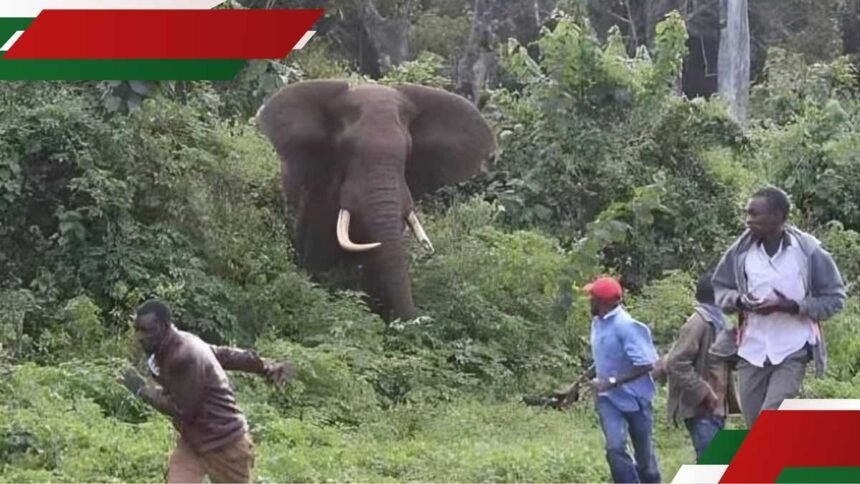
NAIROBI — Demonstrations broke out across parts of Kenya this week after a series of deadly encounters between humans and elephants left four people dead within seven days, underscoring deepening human-wildlife conflict in rural communities.
Residents in Kajiado County, located south of Nairobi, have expressed mounting frustration with authorities as herds of elephants wander into inhabited areas, reportedly in search of food and water. Local leaders say the wildlife incursions have intensified amid drought conditions and shrinking vegetation — factors that are forcing the animals out of traditional reserves and into farmland and grazing areas.
The latest fatalities include a local herder who was trampled while tending goats in the Ole Tepesi area on Tuesday, according to county officials. In a separate incident, one elephant believed responsible for two of the deaths was killed by authorities after it attacked villagers. Preliminary examinations by the Kenya Wildlife Service (KWS) suggest the animal bore injuries consistent with spears and arrows, indicating prior confrontations with humans.
In response to the deaths, hundreds of demonstrators marched in towns near the affected districts, calling for more decisive action from the national government and wildlife officials. Protesters urged enhanced protection for local communities and criticized what they describe as delayed preventive measures.
The Kenya Wildlife Service has appealed for calm as it deploys teams to monitor conflict hotspots and to implement strategies aimed at reducing future clashes. “We are working to strengthen early response mechanisms and to improve community engagement on human-elephant coexistence,” a KWS spokesperson said in a statement.
Kenya’s government operates a wildlife compensation program designed to provide financial support to families affected by animal attacks. Over the years, the scheme has disbursed millions of Kenyan shillings to people injured or killed by wildlife, but many residents argue that such compensation does little to address the root causes of recurring conflict.
Community members and conservation experts alike are now calling for sustainable solutions that balance human safety with wildlife preservation, including habitat restoration, improved water access in protected areas, and innovative deterrent systems to discourage elephants from entering populated zones.