
In a year marked by economic headwinds and shrinking global aid budgets, African nations and international partners have turned a bold vision into tangible results, reshaping how development finance works across the continent. At the centre of this shift is the African Development Fund’s (ADF) 17th replenishment cycle, an ambitious effort to secure up to $25 billion in concessional financing designed to uplift low‑income and fragile economies across Africa — and in late 2025, that vision achieved a historic milestone.
The ADF, the concessional lending arm of the African Development Bank Group (AfDB), has historically played a critical role in financing infrastructure, climate resilience, agriculture, transport and social services in some of the continent’s most vulnerable countries. Since its creation in 1972, the Fund has disbursed more than $45 billion in low‑cost loans, grants, and technical support, helping millions of people gain access to electricity, clean water, education and economic opportunities.
Earlier this year, leaders from across Africa and donor nations rallied behind a target to raise $25 billion for the 2026–2028 funding cycle, reflecting aspirations to move beyond aid dependency and finance investment‑led development at scale. Advocates argued that strengthening the concessional finance pipeline was essential to tackling persistent poverty, climate shocks, regional infrastructure gaps and social vulnerability.
Amid tightening global fiscal conditions — particularly cuts in development budgets among traditional donors — the replenishment pledging session held in London in December delivered a record‑breaking outcome: a historic $11 billion mobilised from 43 partners, far exceeding the previous ADF cycle and underscoring confidence in Africa’s long‑term growth prospects.
What sets this round apart is not just the size of the contributions, but who is stepping up. For the first time in the Fund’s history, 23 African countries contributed directly to their own concessional financing window, pledging a combined $182.7 million, with 19 nations participating for the first time. This five‑fold increase in continental participation reflects a symbolic — and practical — shift toward shared ownership of Africa’s development agenda.
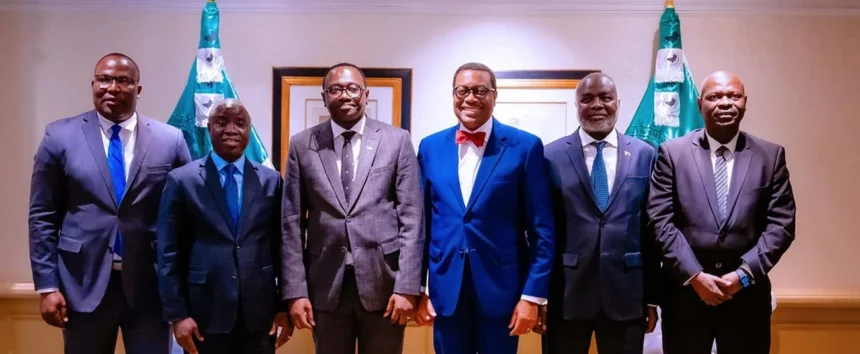
Dr Sidi Ould Tah, President of the African Development Bank Group, described the replenishment as “a turning point,” emphasising that partners chose “ambition over retrenchment, and investment over inertia” despite the challenging global financing environment. His words reflect a broader sentiment among African policymakers: development must be co‑designed and co‑financed by Africans and global partners alike, rather than delivered as traditional aid.
This new financing will underpin initiatives ranging from regional infrastructure projects to healthcare systems, agricultural value chains and climate adaptation programmes. It also reinforces the Fund’s role as a critical source of low‑cost, long‑tenor financing — often with repayment periods exceeding 20 years — for countries that struggle to access commercial credit markets on favourable terms.
The momentum also attracted renewed commitment from traditional donors. Countries such as Norway and Denmark reaffirmed and expanded their pledges, adding billions in support and highlighting international confidence in the ADF’s impact and governance.
Yet challenges remain. The original aspirational target of $25 billion has not been fully reached, and global economic uncertainties — particularly pressures on donor budgets — mean that securing the full ambition will likely require innovative financing strategies. Plans are already underway to explore capital market instruments, blended finance and partnerships with philanthropic organisations to diversify and strengthen the Fund’s long‑term resource base.
For millions of people across Africa who depend on improved infrastructure, basic services, and economic opportunity, the success of the ADF‑17 replenishment is more than a financial headline. It signifies a collective belief in Africa’s potential, a shift toward shared responsibility and ownership, and a concrete step toward financing development in a way that reflects both global solidarity and homegrown investment. As the Fund gears up to deploy this historic capital, the true test will be in translating commitments into measurable impact on the ground — from expanded electrification and roads, to resilient food systems and sustainable livelihoods across the continent.