
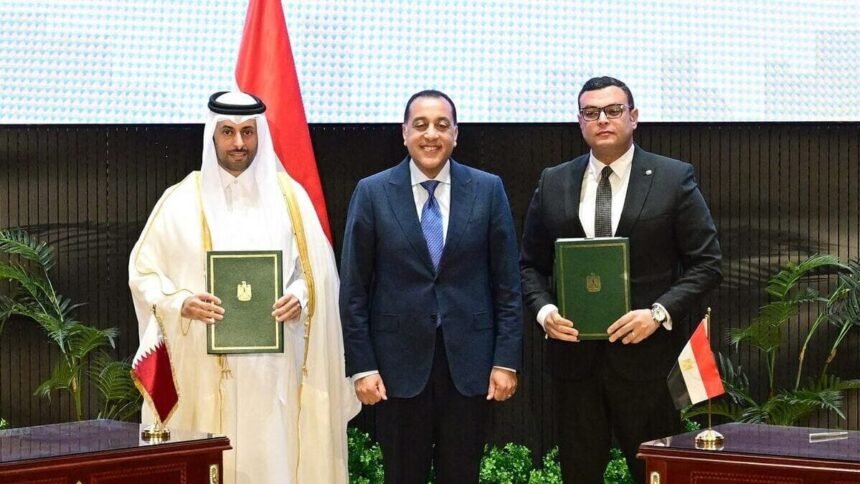
Egypt has taken a significant step forward in its ambitious strategy to transform its Mediterranean coastline into a global tourism and real‑estate hub, receiving a $3.5 billion upfront investment from Qatar as part of a broader development agreement aimed at leveraging foreign capital for sustainable economic growth.
The payment, confirmed by an official Egyptian cabinet statement on December 30, 2025, represents the cash component of a larger multi‑billion‑dollar partnership under which Qatar’s state‑owned real‑estate developer, Qatari Diar, is expected to invest close to $29.7 billion in the Samla and Alam al‑Roum coastal project in Matrouh Governorate on Egypt’s northwest Mediterranean shore.
This mark of confidence by Doha comes as part of a broader $7.5 billion investment pledge to Cairo, underscoring a deepening economic cooperation between the two capitals.
A Strategic Coastal Vision
The Samla and Alam al‑Roum project aims to turn an underdeveloped 4,900‑acre swathe of coastline into a fully integrated resort destination combining luxury residences, international‑standard hotels, marinas, commercial zones, entertainment facilities, and essential community infrastructure such as schools and healthcare services.
While the initial $3.5 billion cash injection secures the land and begins mobilization, a second tranche of value will come through in‑kind contributions. Qatari Diar is expected to deliver approximately 397,000 square meters of residential property within the development, which when sold is anticipated to generate roughly $1.8 billion in additional value.
Under the agreement, Egypt’s New Urban Communities Authority (NUCA) will also benefit from 15 percent of net profits generated by the project after Qatari investors recoup their initial outlays — a revenue‑sharing mechanism aimed at ensuring long‑term mutual benefit.
Jobs, Tourism, and Regional Ambitions
Egyptian officials have highlighted the potential socioeconomic impact of the development, forecasting the creation of hundreds of thousands of direct and indirect jobs once construction and operations scale up. These employment opportunities—from construction, hospitality, and services to retail and logistics—are seen as especially vital in a period where foreign direct investment flows are central to sustaining national growth.
The project also aligns with Egypt’s broader strategy of promoting tourism‑led growth, diversifying its economic base beyond traditional sectors. By crafting high‑end, global‑competitive destinations along the Mediterranean coast, Cairo is positioning itself as an attractive alternative for international tourists and investors alike, drawing on its strategic location at the crossroads of Africa, Europe, and the Middle East.
Geopolitical and Economic Context
This latest inflow of Qatari capital follows other significant Gulf investments in Egypt’s coastal zones, most notably the $35 billion development agreement with an Abu Dhabi‑led consortium in the Ras El Hekma region. Together, these agreements reflect a broader trend of Gulf states deepening economic partnerships with Cairo, even as regional dynamics remain complex.
For Egypt, which continues to navigate macroeconomic pressures including inflationary challenges and external financing needs, such strategic partnerships are pivotal. They not only bring much‑needed capital but also reinforce confidence among global investors in the country’s long‑term development trajectory.
As implementation begins in earnest in 2026, this Qatar‑supported project will be closely watched as a bellwether for foreign investment trends across North Africa and a key driver of Egypt’s vision to reshape its Mediterranean coastline into a premium global destination.