
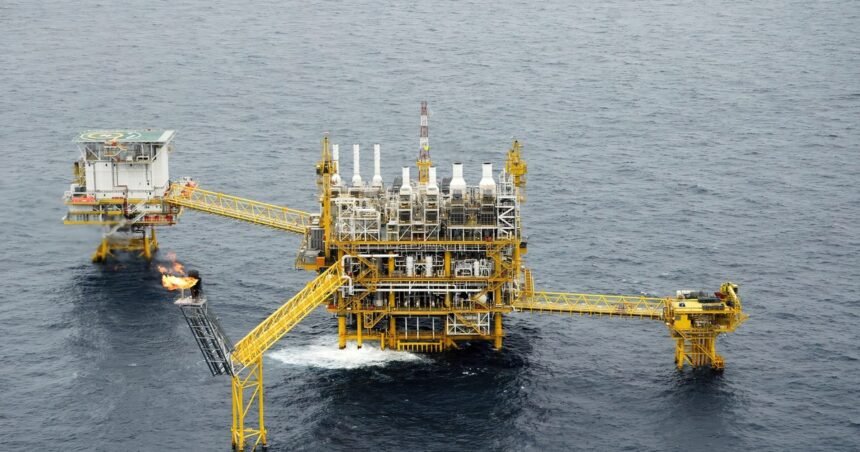
In a move poised to reshape North Africa’s energy landscape, Libya has launched its first oil exploration bidding round in more than 17 years, signaling a renewed drive to attract foreign investment and unlock vast hydrocarbon potential after years of instability.
The initiative was announced on March 3, 2025, by officials from the National Oil Corporation (NOC) in Tripoli, marking a significant pivot toward revitalizing the country’s dominant economic sector and restoring confidence among global energy players.
A Historic Opening for Libya’s Upstream Sector
The new bidding round is the first comprehensive upstream licensing initiative since 2007, offering 22 oil and gas exploration blocks equally divided between onshore and offshore territories—including the prolific Sirte, Ghadames, and Murzuq basins.
Officials describe this licensing round as a long-overdue opportunity to modernize Libya’s oil sector. With reserves estimated at roughly 48 billion barrels, the country holds the largest proven oil reserves in Africa and remains one of the continent’s most important producers.
“Issuing these blocks for competitive bidding sends a clear message that Libya is open for business and ready to partner with leading international companies,” said a senior NOC representative at the March announcement.
Global Majors Eye Libyan Opportunities
Interest from international energy firms has been substantial. According to Libya’s oil sector authorities, dozens of multinational companies have moved forward in the bidding process, including major Western and Asian players such as BP, Shell, Chevron, TotalEnergies, ExxonMobil, Eni, and CNODC.
This level of engagement reflects growing optimism about Libya’s improving security conditions and energy governance framework, which has been a key impediment to foreign participation since the unraveling of centralized authority after the 2011 conflict.
Industry analysts highlight that improved regulatory clarity and a “Production Sharing Agreement V” framework are part of concerted efforts to make Libya’s blocks more competitive, offering potential for enhanced returns for investors willing to navigate the country’s evolving risk profile.
Economic Impact and Production Goals
For Libya, oil revenues represent the lifeblood of the national economy, accounting for more than 90 percent of export earnings and government income.
State planners are aiming to boost crude production beyond current levels—estimated at around 1.4 million barrels per day—with long-term targets of reaching 2 million barrels per day by the end of this decade.
Reinforcing production and export capacity could have transformative effects on Libya’s broader economy, supporting infrastructure investment and helping stabilize a nation still grappling with political divisions and logistical constraints.
Challenges and Prospects
While the bid round marks a critical step forward, challenges remain. Libya’s security situation, though improved in some regions, continues to vary, and operational risks still concern potential investors. Additionally, the competing political authorities in the east and west of the country have historically complicated centralized policy implementation.
Despite this, the bidding round has been welcomed by major market participants as a sign of Libya’s commitment to re-engage with the global energy economy. “The world has not forgotten Libya’s potential,” said one sector advisor. “This is an invitation for long-term collaboration.”
A Turning Point for Libya’s Oil Sector
As companies prepare and submit their bids ahead of final awards expected in early 2026, this historic round could be the catalyst for renewed upstream investment across Africa’s once-neglected oil frontier. With momentum building among international oil majors and heightened global energy demand, Libya’s re-entry into competitive exploration may well mark a turning point—not just for the country’s energy industry but for the region’s economic integration into global energy markets.
If successfully executed, this initiative could help Libya reclaim its standing as a key oil exporter and provide a template for other African nations seeking to balance resource potential with investor confidence in a complex geopolitical era.