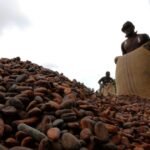

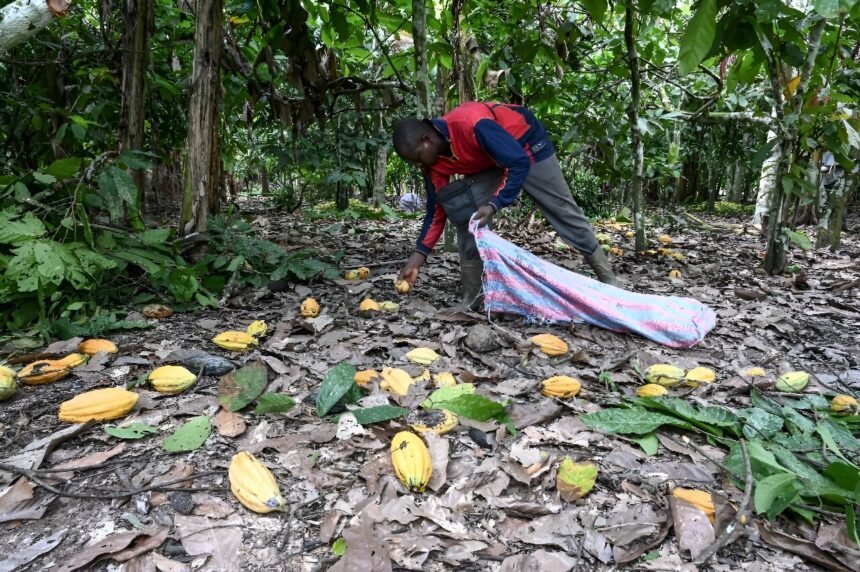
ABIDJAN — In what local farmers describe as a “once-in-a-generation disaster,” Ivory Coast’s cocoa industry — responsible for nearly 40 percent of global supply — has been severely crippled by unusually heavy and relentless rains, dashing harvest hopes and imperiling incomes across the country’s rural heartland.
The West African nation, long synonymous with cocoa production and relied upon by global chocolate supply chains, saw rainfall in key growing regions soar 20 to 40 percent above long-term averages, according to meteorological data, making 2023 one of the wettest seasons in decades.
Record Rains, Collapsed Harvests
Typically balanced cycles of sun and rain are essential for cocoa trees to flourish. But this year’s unprecedented downpours wiped out fragile flowers that would have become pods, leaving trees barren and farmers staring at dramatically reduced yields.
“In the worst affected areas, it felt like the soil was a lake,” said one farmer in the southeastern cocoa belt, referring to continuous rainfall that flooded fields and suffocated cocoa roots. “The flowers just fell off. There’s nothing left to harvest.”
With warehouses now nearly empty, producers and exporters are bracing for what could be a slump in exports that reverberates far beyond Ivory Coast’s borders.
Economic Shockwaves
Cocoa is more than a cash crop in Ivory Coast — it is a cornerstone of the economy, employing millions of smallholder farmers and generating a fifth of national income. When output falters, entire communities feel the impact.
The government suspended forward sales of cocoa early in the season after forecasters warned that output would fall significantly, undercutting confidence among international traders and commodity houses.
The disruption has also sent shockwaves through global markets. With supplies tightening, international cocoa prices climbed to multi-decade highs, reaching their strongest levels since the late 1970s and 1980s in London and New York commodity exchanges.
Smallholders Feel the Pain
For smallholder farmers — who make up the backbone of the sector — the human cost of the weather crisis is stark. With reduced bean volumes and limited marketable crops, household incomes are expected to plunge, leaving families vulnerable to deeper poverty and uncertainty.
“I planted these trees because they are supposed to feed my children,” said one cocoa grower in Aboisso, lamenting that fields now lie soggy and unproductive. “But without a crop, there is no income. It’s a desperate time for us.”
The state-set farmgate price was increased this year in an attempt to cushion farmers, but many experts warn that price adjustments cannot offset the sheer loss of beans that should have been harvested and sold.
Climate Change and the Future of Cocoa
Experts argue that the crisis underscores the growing threat of climate volatility on agricultural staples in West Africa. With global weather patterns shifting — and phenomena like El Niño adding further unpredictability to seasonal rains — farmers are facing conditions that historical practices are ill-equipped to handle.
“Ivory Coast’s cocoa sector is at the frontline of climate change,” said an agricultural economist. “When the rains come too hard or not enough at all, the effects are devastating.”
Looking Ahead
As the 2025/26 main crop season unfolds, stakeholders are urging coordinated action — from improved weather forecasting to resilient farming techniques — to protect the future of a sector that underpins livelihoods and global chocolate production alike. Analysts caution that without adaptation, such climate shocks could become the new normal, reshaping where and how cocoa is grown in Africa and beyond.