
Lagos, Nigeria — January 19, 2026 — Nigeria, Africa’s largest economy, stands at a critical juncture: having recently stabilised key macroeconomic indicators through controversial reforms, the nation now faces what international institutions and domestic experts describe as an unprecedented political threat to its fragile economic gains.
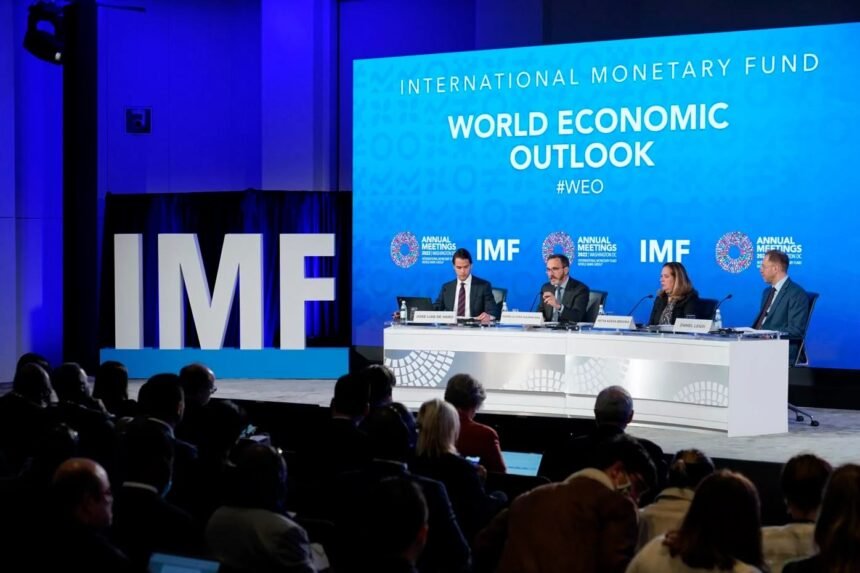
At last week’s 2026 Macroeconomic Outlook event in Lagos, hosted by the Nigerian Economic Summit Group (NESG), officials from the International Monetary Fund (IMF) delivered a stark warning: policy reversals driven by political cycles — not economic fundamentals — could erode progress made over the past two years.
Stability Without Certainty
Nigeria’s economy has been in the spotlight since President Bola Ahmed Tinubu’s administration embarked on sweeping reforms after taking office in 2023 — from abolishing fuel subsidies to unifying multiple foreign exchange rates and overhauling tax structures. These moves were designed to tackle deep-rooted distortions and attract investment but came with political costs and public hardship.
According to the IMF’s Country Representative, Dr. Christian Ebeke, the progress made — including moderating inflation and macroeconomic stabilisation — is real but incomplete. He specifically flagged fiscal complacency at the subnational level and the danger that pre-election spending could undermine fiscal discipline.
“Government intervention in controlling prices and volumes is no longer sustainable for Nigeria. The objective going forward must be to stay the course on both fiscal and monetary policy,” Ebeke told the audience.
Political Cycles Meet Economic Fragility
The IMF’s warning strikes at the heart of Nigeria’s political-economic challenge: with general elections looming in 2027, analysts are increasingly concerned that political priorities may supersede economic prudence. This dynamic could reverse critical reforms that have taken root only recently, dampening investor confidence and slowing growth momentum.
Economist Niyi Yusuf, Chairman of the NESG, emphasised that while stability has improved, inclusive growth remains out of reach. He cautioned: “Stabilisation alone is not enough — we must convert those gains into durable outcomes that benefit households and businesses alike.”
Underlying Challenges Remain
Beyond the political spectre, Nigeria’s economic landscape is complicated by structural issues. A recent independent analysis of the Nigeria Tax Act, 2025 suggests that hastily implemented tax reforms could dampen competitiveness and deter foreign investment if not carefully calibrated. Critics argue that sudden increases in capital gains taxes and levies risk pushing investors toward more stable regional markets like Ghana or Rwanda.
Even as non-oil sectors such as agriculture and services show promise, lingering risks — including security challenges in parts of the country and fluctuating global commodity prices — keep the recovery fragile. Additionally, inflation reporting revisions and national statistical rebasing highlight the difficulty of accurately tracking economic momentum in real time.
Markets Watch Closely
Global and domestic stakeholders are closely monitoring Nigeria’s policy signals. While recent reform measures have stabilised foreign exchange rates and slowed inflation, investor sentiment remains sensitive to political noise and uncertainty about future policy directions.
Political economist Tilewa Adebajo summed up the broader view: “The threat isn’t simply political rhetoric — it’s the real potential for policy U-turns to undo years of hard-fought progress. Economic reforms take time to bear fruit; political reversals can undo that work almost overnight.”