
In a strategic pivot signaling renewed global engagement, the World Economic Forum (WEF) has confirmed plans to revive its hallmark Africa meetings in April 2027, marking a major reset for Africa’s role in global economic dialogue after an eight‑year interruption.
The announcement was made in Davos, Switzerland, during the Forum’s 56th Annual Meeting, where leaders from business, government, civil society, and international organisations have convened under shifting geopolitical and economic currents.
WEF Africa 2.0: A Return with Purpose
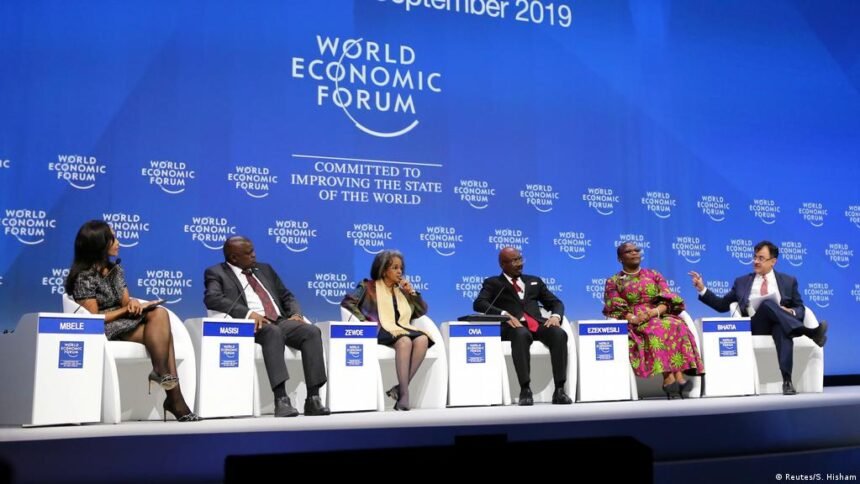
Last hosted on African soil in Cape Town in September 2019, the WEF’s dedicated Africa summit was shelved amid the global disruptions triggered by the COVID‑19 pandemic and broader strategic recalibrations. Now slated for either Johannesburg or Cape Town, the relaunch represents more than a logistical milestone: it underscores Africa’s emerging prominence in global economic architecture and the Forum’s renewed focus on the continent as a catalyst for inclusive growth.
Chido Munyati, WEF’s Head of Africa, told reporters that the organisation is “committed to deepening engagement with African public and private stakeholders,” highlighting the continent’s dynamic demographic profile, technological potential, and entrepreneurial momentum as core reasons for the revitalised initiative.
Beyond Davos: Africa’s Narrative on the World Stage
The timing of the announcement coincides with larger shifts in how Africa is perceived in global forums. Discussions in Davos this year frequently referenced Africa’s demographic dividend and its strategic industries—from fintech and renewable energy to agribusiness and creative sectors—indicating that global investors and policy leaders are paying closer attention to Africa’s growth story.
Panel sessions and high‑profile interventions also spotlighted African innovators and leaders, emphasising not only challenges but the opportunities presented by youth‑driven economies and burgeoning social enterprise ecosystems that are already generating billions in revenue and millions of jobs across the continent.
South Africa’s Dual Role: Host and Showcase
For South Africa—poised to host the 2027 summit—the relaunch is both a diplomatic win and a platform to showcase tangible economic reforms. South African officials were outspoken in Davos about recent policy achievements, including stabilisation of electricity supply, infrastructure upgrades, removal from the Financial Action Task Force (FATF) greylist, and a sovereign credit upgrade, all positioned to strengthen investor confidence.
Finance Minister Enoch Godongwana framed the country’s presence at the Forum as evidence that South Africa is “returning not with promises, but with real successes,” using the global stage to sharpen its investment narrative and attract partners for long‑term growth.
A Broader Continental Signal
The relaunch of WEF Africa amplifies a broader trend toward greater African participation in global economic governance and dialogue. Across the Davos programme this year, African delegates—including heads of state, cabinet ministers, and private sector champions—urged deeper engagement with global investors and partners to unlock infrastructure financing, support local enterprise, and advance regional integration under frameworks such as the African Continental Free Trade Area.
As the Forum shifts gear toward its spring 2027 continental event, stakeholders anticipate a markedly different profile for WEF Africa: one driven by African agendas, partnerships that go beyond aid, and growth strategies that leverage local innovation for global impact.