
African currencies came under renewed strain this week as a stronger U.S. dollar and heightened demand for hard currency weighed on exchange rates across the continent, highlighting persistent macroeconomic pressures facing emerging-market economies. The trend underscores continuing challenges for policymakers striving to balance import costs with inflation containment and foreign investment flows.
Foreign exchange markets in major African financial hubs saw local units depreciate against the dollar, driven by robust external demand for U.S. currency amid a backdrop of tighter global liquidity conditions and lingering concerns over global growth. Analysts say the dynamics reflect both cyclical forces in international capital markets and structural constraints within African economies.
Dollar Demand Drives FX Stress
Across multiple African currency markets, the U.S. dollar strengthened against local units, pushing many central banks to intervene to stem volatility and protect foreign exchange reserves. Traders attributed the renewed demand for dollars to a combination of seasonal import payments, repatriation of earnings by multinational firms, and speculative positioning that favours safe-haven assets amid global uncertainty.
“Dollar demand is a recurring theme in periods of cross-border capital flows and risk aversion,” said a Lagos-based foreign exchange strategist. “When international liquidity tightens, it puts pressure on emerging-market currencies that are already managing fiscal and current account pressures.”
Winners and Losers on the FX Sheet
While most currencies weakened, a few exhibited relative resilience. The Moroccan dirham and Egyptian pound — both managed currencies with relatively higher reserve buffers — posted more modest losses compared with some of their peers. In contrast, the Nigerian naira, Kenyan shilling, and South African rand experienced sharper declines, reflecting greater sensitivity to capital outflows and commodity price shifts.
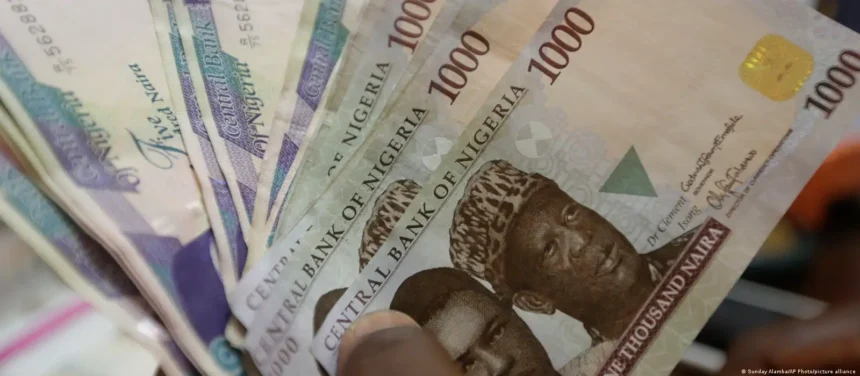
The naira’s slide has particular domestic repercussions, as Nigeria imports a wide range of industrial and consumer goods. For Nigerian businesses reliant on imported inputs, the weaker naira translates into higher costs, potential price increases for consumers, and pressure on profit margins. Meanwhile, the rand’s depreciation complicates the task of South African policymakers seeking to balance support for growth with inflation targets.
Policy Responses and Central Bank Actions
In response to currency pressures, several central banks deployed limited foreign exchange interventions, selling dollars to supply the market and cushion depreciation. Central bank officials have emphasised that strategic use of reserves — while necessary — must be balanced against the need to preserve buffers for future shocks.
At the same time, monetary authorities in Kenya and South Africa signalled readiness to adjust policy levers if necessary, including revisiting interest rate settings to manage inflation expectations and support the currency. These decisions will be closely watched by investors seeking clarity on how African policymakers navigate the twin challenges of currency stability and economic growth.
Impact on Trade and Investment Flows
Currency weakness has broader implications beyond balance-sheet effects. For exporters, a softer local currency can provide a competitiveness boost in foreign markets, potentially increasing demand for African goods priced in dollars. However, for import-dependent sectors — including energy, pharmaceuticals, and manufacturing — the cost of foreign inputs rises, potentially feeding into inflation and eroding margins.
Foreign direct investment (FDI) flows could also be affected. Investors often monitor currency trends as part of broader risk assessments; sustained depreciation may deter capital inflows where returns are uncertain or hedging markets are thin. Conversely, some investment strategies exploit currency volatility, offering opportunities for asset managers and hedge funds in search of higher yields.
Outlook: Balancing Risks and Opportunities
Economists say Africa’s currency markets are likely to remain sensitive to external conditions — particularly U.S. monetary policy, global growth prospects, and commodity price trends — throughout 2026. Tighter global liquidity, shifting risk sentiment, and evolving trade dynamics mean that policymakers must remain agile in their response frameworks.
“Emerging markets, including those in Africa, are often at the mercy of global capital flows,” said a Johannesburg-based economist. “The key for African central banks will be to strike a balance between defending the currency and supporting economic growth objectives.”
As domestic economies continue their recovery paths, the interplay between global dollar demand and local monetary policy will be a defining theme for African markets, shaping investment decisions, export performance, and inflation dynamics through the year ahead.