
As Africa’s population surges and its youthful demographic becomes a central driver of global economic growth, a silent crisis threatens to undercut the continent’s promise: millions of children are moving through school without mastering basic reading, writing and numeracy skills. This educational shortfall, experts warn, is not simply a schooling problem — it is a looming economic and social catastrophe that could stifle Africa’s competitiveness well into mid‑century.
Africa’s demographic dividend — the rapid expansion of its working‑age population — is world‑renowned. By 2050, one in three young people globally is expected to be African. This surge can power innovation, productivity and growth, but only if those young people possess the foundational skills to participate effectively in the modern economy.
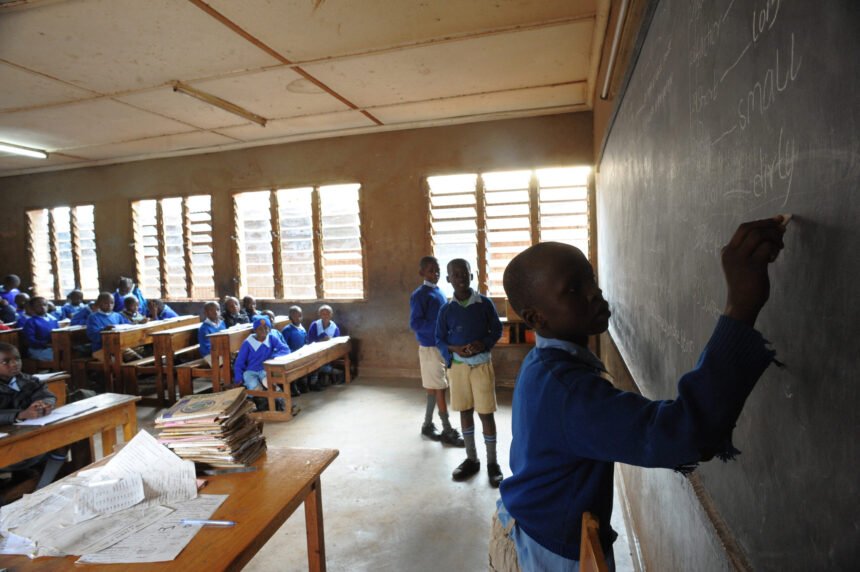
Yet, across the continent, too many learners emerge from early grades with reading and math skills that would be considered elementary even a decade ago. Educators and policymakers describe this as a “learning crisis” — one with direct consequences for future productivity, employment, and social inclusion. Without early proficiency in basic skills, students are more likely to fail, repeat grades, or drop out entirely, diminishing their prospects for tertiary study or gainful employment.
The High Stakes of Early Learning
Scholars, business leaders and education advocates have underscored that foundational learning is the bedrock on which all other educational and economic gains rest. From basic literacy and numeracy to critical thinking and problem‑solving, these skills are essential for learners to thrive in more complex domains such as science, technology, engineering and mathematics (STEM), or to adapt to rapid technological shifts including artificial intelligence.
Data shows that scaling evidence‑based foundational learning interventions is both feasible and affordable. Programs that combine structured pedagogy — intensive teacher training, high‑quality instructional materials and regular coaching — can yield measurable learning gains at an annual average cost of just USD 5–6 per child. That modest investment typically accounts for only 1–2% of annual national education spending, yet it can deliver up to 30 times that amount in long‑term economic returns.
Experts argue that the failure to invest in early‑grade learning today translates into staggering opportunity costs tomorrow. When children do not learn basic skills, they are more likely to struggle throughout their schooling and less likely to contribute effectively to the workforce. This translates into lost productivity, entrenched inequality and mounting unemployment — all of which undermine economic growth and social cohesion.
Policy Shifts and Funding Realities
Despite the urgency, funding for education in several African countries remains constrained. Many governments spend a disproportionate share of their education budgets on salaries, leaving limited resources for instructional quality, learning materials and teacher development — elements crucial for improved outcomes. Some countries are now experimenting with outcome‑based budgeting and new domestic funding models to ensure every dollar yields measurable improvements in learning.
Domestic financing must be matched with political resolve. Leaders at both national and continental levels, including South Africa’s President Cyril Ramaphosa, have reiterated that foundational learning should be at the “heart” of education systems, linking early literacy and numeracy to broader development priorities.
At the continental level, the African Union and education networks have pushed for collaborative frameworks that encourage peer learning and shared accountability among ministries of education and finance. These platforms aim to embed best practices across systems and align national strategies with regional development goals.
Business and Civil Society: Critical Partners
The private sector and civil society are also stepping up to bridge gaps. Philanthropic organisations, corporate alliances and multilateral partnerships are channeling resources into teacher training, curriculum innovation and data systems that track learning progress. These efforts complement government strategies and amplify the impact of domestic investments.
Looking Ahead
Africa’s future prosperity depends not just on the size of its youth population, but on the skills that young people bring to the global economy. Foundational education is not an optional luxury; it is an economic imperative, a social investment and a moral obligation. As leaders chart post‑pandemic development paths, the decision to prioritise early learning will determine whether Africa’s demographic advantage becomes a dividend of broad‑based prosperity or a legacy of unrealised potential.