
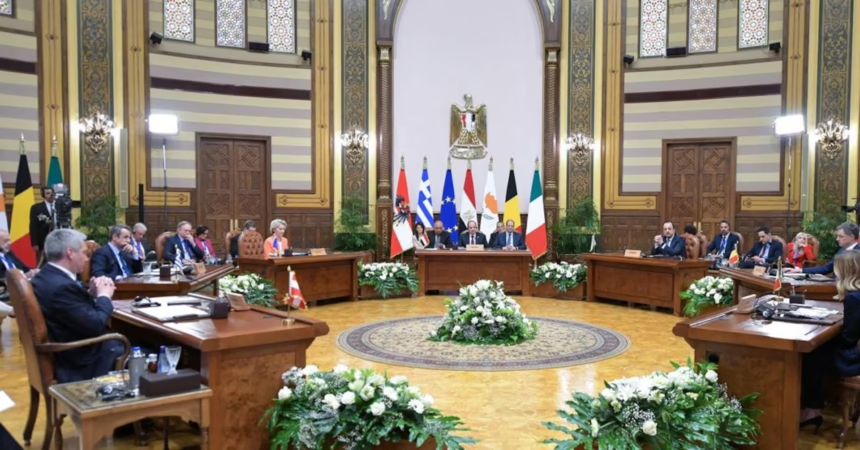
CAIRO — Egypt has signalled strong confidence that it will receive the remaining €4 billion from a major European Union financial support package by 2027, part of a broader effort to stabilise its economy amid regional uncertainty and external shocks. The announcement came during a high-level press briefing in Cairo, underlining Cairo’s commitment to economic reforms required for disbursement of the funds.
Egypt has already received €1 billion of the total package, which forms part of a €7.4 billion EU strategic partnership aimed at bolstering macroeconomic stability, investment and resilience within the North African nation.
EU Support Tied to Economic Reform and Stability
Foreign Minister Badr Abdelatty confirmed that the next tranche of €1 billion is expected imminently following Egypt’s completion of key reviews under its International Monetary Fund (IMF) programme. Abdelatty emphasised that the disbursement process is closely linked to Egypt’s progress on structural reform measures.
The €7.4 billion commitment stems from a Strategic and Comprehensive Partnership established between Egypt and the EU in March 2024, designed to address persistent economic challenges while fostering investment, trade and regional cooperation across several policy areas.
Under the agreement, approximately €5 billion is earmarked as concessional macro-financial assistance (MFA) that Egypt will repay over a long period, including grace periods. An initial €1 billion of this has already been deployed to strengthen fiscal buffers and support budgetary needs, with the remaining €4 billion to follow in phased disbursements by 2027.
Economic Pressures and Reform Imperatives
Egypt’s economy has faced a complex mix of domestic and external pressures in recent years. Challenges include currency volatility, inflationary trends and the lingering economic fallout from geopolitical disruptions such as conflict in Gaza and shipping insecurity in the Red Sea.
The EU’s financial backing is closely coordinated with IMF oversight; Egypt has been advancing its reform agenda — including fiscal consolidation and public financial management improvements — to align with programme conditions. The country’s progress on these fronts has been pivotal to unlocking further funding tranches.
Broader Goals of the EU Partnership
Beyond direct budget support, EU assistance is aimed at strengthening institutional capacity and economic resilience. The strategic partnership also encompasses investment guarantees, private sector financing and development grants to catalyse long-term growth and job creation.
For European policymakers, the support package underscores the EU’s strategic interest in stability and prosperity in the Mediterranean and North Africa region. It aims to foster sustainable investment while mitigating migration pressures and reinforcing political cooperation.
Outlook for Economic Recovery
Egypt’s leadership has framed the EU support as a vote of confidence in the country’s reform trajectory and economic potential. Officials have reiterated efforts to not only meet IMF targets but also to use the assistance to catalyse private investment, boost export competitiveness and reduce vulnerability to external shocks.
As economic actors and investors watch progress closely, the staged arrival of EU funds over the next two years could help Egypt navigate near-term fiscal challenges and strengthen confidence in its medium-term growth path.