
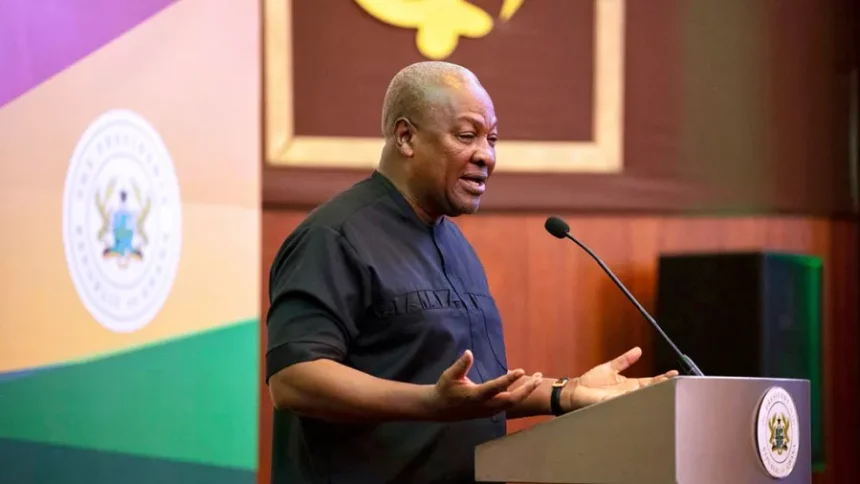
ACCENT ACCRA — Ghana’s government has taken a decisive step to stabilise its beleaguered energy sector by settling approximately $1.47 billion in long-standing power debts, a move authorities say will help restore electricity stability, strengthen investor confidence, and reset the fiscal foundations of a sector long plagued by arrears and reliability concerns.
The comprehensive repayment, completed within President John Dramani Mahama’s first year in office, addresses obligations to foreign partners, independent power producers, and multilateral institutions that had accumulated over years of unpaid bills and fiscal strain.
Breaking the Debt Spiral
According to Ghana’s Ministry of Finance, the $1.47 billion payment package included:
- $597.15 million to fully reinstate the World Bank’s partial risk guarantee, enabling nearly $8 billion in private investment in fields like the Offshore Cape Three Points and Sankofa gas projects;
- $480 million to clear outstanding gas invoices owed to ENI and Vitol, critical fuel suppliers;
- $393 million to settle legacy debts with independent power producers such as Karpowership and Cenpower.
Officials describe this settlement as a defining reset for a sector that had seen arrears balloon and disrupted power supply — locally dubbed “dumsor” — undermine household comfort and corporate operations for years.
Rebuilding Credibility and Reliability
Restoring the World Bank’s partial risk guarantee was central to this strategy. The guarantee — previously exhausted under earlier administrations — is seen as vital to unlocking foreign direct investment and boosting domestic gas supply, which fuels a significant share of Ghana’s power generation.
Finance authorities have paired the debt settlement with renegotiated contracts and budget provisions designed to prevent future arrears, even as independent trackers indicate that some legacy payments to private producers still remain rescheduled over coming years.
For energy sector partners, “certainty of payment” is essential. In previous years, enterprises such as Karpowership threatened shutdowns due to unpaid bills — a scenario that risked further destabilising national supply if left unresolved.
Economic Signals and Challenges Ahead
Economists caution that while clearing legacy debt is necessary, Ghana’s broader energy system still faces structural challenges. Outages, grid inefficiencies, and a need for further investment in generation and distribution networks continue to pose risks for businesses and consumers alike.
Nevertheless, government officials insist the 2025 debt clearance — timed with fiscal reforms and renegotiated energy contracts — lays the groundwork for more stable electricity delivery, helps reassure creditors and investors, and supports economic growth targets set for 2026 and beyond.
For Ghana’s households and enterprises, the ambition is clear: end the cycles of unpredictability in power supply, attract fresh investment, and transform a sector once synonymous with arrears into one capable of powering national development.