
In a decisive move to protect the livelihoods of millions of rural producers and stabilise West Africa’s most important agricultural export, the Ivorian government has unveiled a major cocoa buyback scheme, injecting fiscal firepower into a sector hit by global price slumps and logistical gridlock.
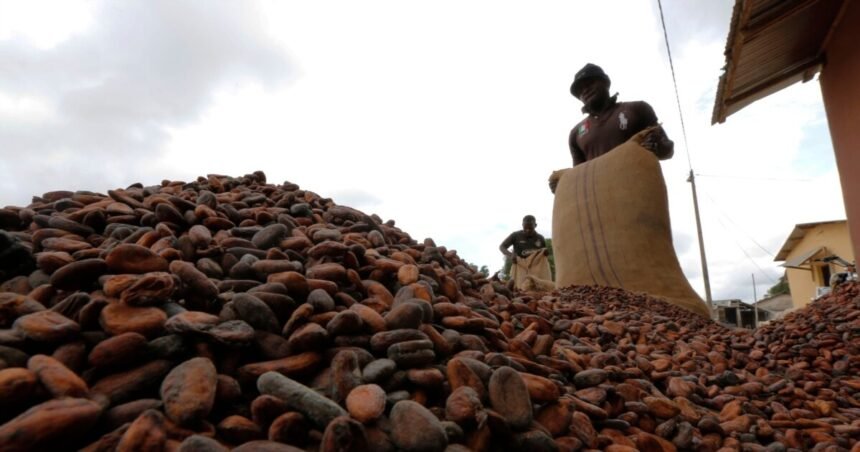
The Coffee and Cocoa Council (CCC) — the statutory body responsible for regulating the world’s largest cocoa industry — has committed 280 billion CFA francs to purchase surplus beans from cooperatives and smallholder farmers. The programme aims to absorb upwards of 100,000 tonnes of unsold cocoa by the end of March, asserting state support where private buyers have faltered.
Market Reality Meets Government Action
A perfect storm of weak global cocoa prices and port congestion at Abidjan has left vast quantities of beans languishing in rural storage, cutting off cash flows to farmers at the very moment they need income. Exporters, deterred by depressed futures and logistical bottlenecks, have largely refused to lift available stocks, creating a widening gulf between producers and the market.
CCC Director-General Yves Brahima Koné acknowledged the dual challenges: delayed shipments out of Abidjan’s ports and a lack of liquidity across the commercial chain. “These factors combined have led to a slowdown in commercialisation within the country,” he explained, underscoring the urgency of state intervention.
The buyback strategy is designed to ensure farmers receive the official, government-guaranteed price rather than being forced to accept steep discounts or go unpaid while beans rot. Koné stressed the scheme would restore confidence and help avert what many feared could become a social crisis in rural cocoa belts.
A Safety Net for an Industry in Flux
Unlike some commodity markets with freely fluctuating prices, Ivory Coast’s cocoa sector operates under a state-set price system that insulates producers from the worst of global volatility. Still, when international buyers balk at purchasing at set levels — as they have recently — the risk of earnings shortfalls ripples through farming communities that depend on cocoa income for schooling, food, and basic services.
Under the new programme’s first phase, the state will buy and store the excess beans; subsequent stages will focus on selling the accumulated stockpiles once market conditions improve and demand returns. Officials say the CCC stands ready to move quickly when buyers re-engage — a sign that policymakers are equally focused on stabilisation and long-term export prospects.
Broader Impacts on the Cocoa Economy
The staggering scale of Ivory Coast’s cocoa production — the country alone accounts for an estimated 40 % of global supply — means the success or strain of its internal markets reverberates worldwide. Market analysts have noted that when buyers fail to purchase cocoa at guaranteed prices, it isn’t just incomes at stake: port activity, export revenues and the entire commodity chain can get disrupted.