
LAGOS — In late August, as the shea nut harvest was peaking across northern Nigeria, a government directive landed like a thunderbolt: a six-month ban on the export of raw shea nuts. Announced as a bold strategy to transform Nigeria from a raw material supplier into a global powerhouse of refined shea products, the policy was meant to be a watershed moment for rural women and the national economy alike. Instead, in the months that followed, the ban exposed deep fault lines in planning, capacity and livelihoods that now threaten the very communities it sought to empower.
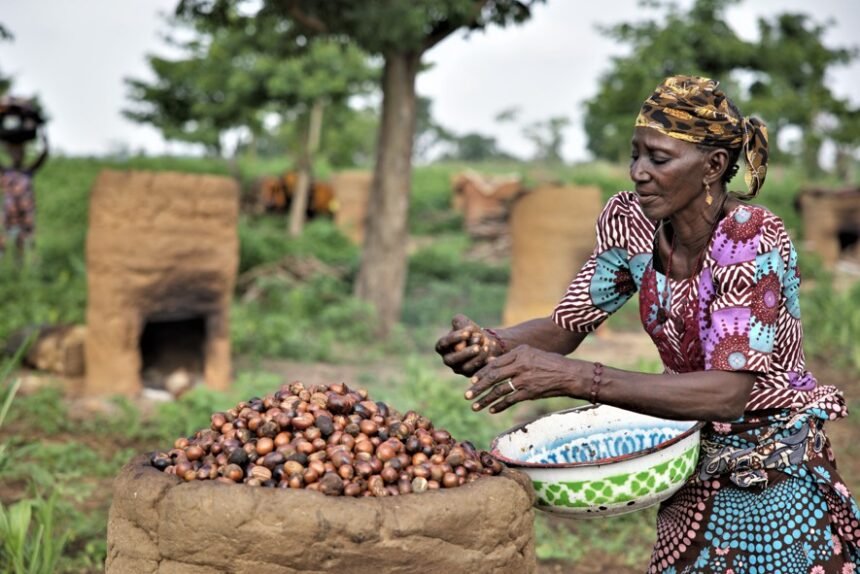
Nigeria produces nearly 40 percent of the world’s shea nuts, a crop often dubbed “women’s gold” because more than 95 percent of collectors and processors are women, typically from rural villages in states such as Niger, Kwara and Kebbi. The government’s rationale was straightforward: by keeping raw nuts within Nigeria and encouraging local processing into shea butter and derivatives used in cosmetics and skincare, the country could capture far more value, create jobs and lift incomes. Officials projected annual revenue potential from processing could rise to as much as USD 3 billion by 2027, up from only tens of millions earned from raw exports.
But the stark reality has been far messier.
Almost immediately after the export ban took effect, she a nut prices plunged sharply, dropping by roughly 33 percent on local markets as demand from foreign buyers evaporated and local processors lacked the capacity to absorb the flood of raw material. Many women who had spent weeks gathering and drying nuts found their hard work suddenly worth far less, with earnings that were once reliable barely covering basic household needs.
For rural women like Aisha Umaru (name changed for privacy), who has harvested and sold shea nuts for over a decade, the impact has been personal and immediate. “We were told this ban would help us,” she said from her village in northern Nigeria. “But now we cannot sell our nuts for good money. Some days we do not sell at all, and we have children to feed and school fees to pay.”
Local traders and aggregators echoed this frustration, as many had stocked up large quantities of nuts ahead of the season, only to see anticipated export contracts collapse. Some risk defaulting on loans taken to finance their purchases, and a number of small buyers have been forced to close shop altogether.
Economic analysts now describe the situation as a policy backfire—a well-intentioned attempt at fast-tracking industrialisation that overlooked a foundational reality: Nigeria’s shea processing infrastructure remains uneven and underdeveloped. Simply banning exports did not automatically unlock a network of processing facilities capable of turning the country’s abundant raw materials into finished products at scale.
Industry stakeholders are sharply divided. Some argue the country needs a phased approach—building capacity gradually and matching policy with support measures such as access to finance, infrastructure investment and guaranteed purchase commitments for local processors. Others see the ban as a disruptive but necessary shock to break long-standing dependency on raw exports.
Meanwhile, processors with existing factories have benefited from a temporary surge in supply at lower prices, allowing them to operate more efficiently and secure input materials. Yet critics point out this effectively penalises primary producers (mostly women) in favour of mid- and downstream processors, rather than creating a genuinely shared value-chain growth model.
In Abuja, government officials maintain that the policy is still in its early days and that the long-term benefits will outweigh short-term pain if supported by industrial expansion and investment incentives. But for many women in Nigeria’s shea belt, the lesson of the past few months is clear: economic reform without accompanying structural capacity can leave those it is meant to help worse off than before.
As the six-month ban period progresses toward its review, the question now is less about intention and more about execution. Will Nigeria repair this policy misstep and align industrial ambitions with grassroots realities? Or will a promising chapter in agro-industrial transformation become a cautionary tale of good intentions unfolding without the essential groundwork to support them? Only time will tell—but for now, many of the country’s rural women remain waiting, their baskets half full and their hopes tempered by hard-earned lessons.