
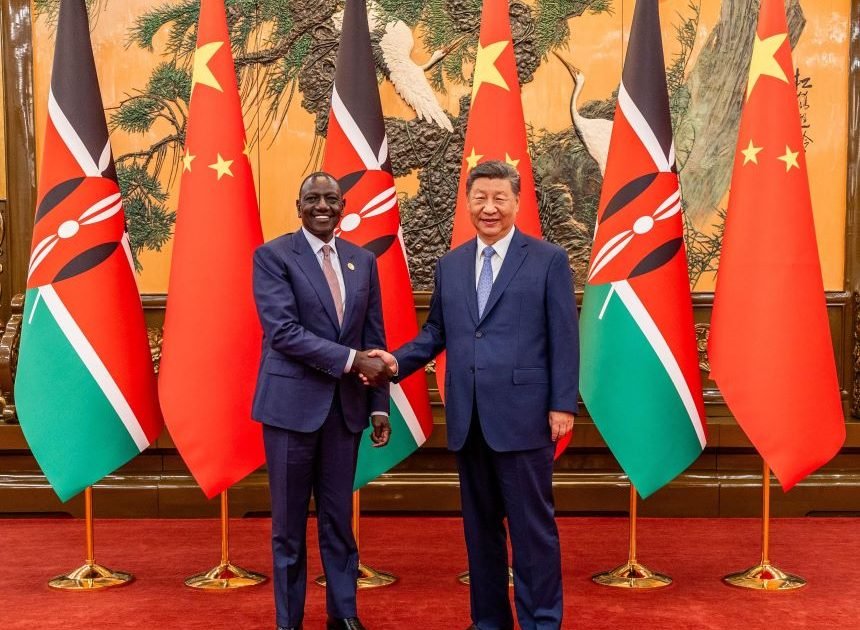
NAIROBI — In what analysts are calling a timely boost to Kenya’s battered export economy, Nairobi has successfully secured a trade agreement with China aimed at easing tariffs on key agricultural exports, a move that could unlock new markets and spur growth for smallholder farmers and agribusinesses alike.
The agreement — inked in late November 2025 — reflects intensifying efforts by Kenya to diversify its trading partners and reduce dependency on traditional markets such as the United States and the European Union. Officials say the deal offers a more predictable environment for coffee, tea, avocado and other flagship commodities, providing Kenyan exporters a chance to compete more effectively on the global stage.
New Opportunities for Kenya’s Agricultural Sector
Kenya’s call for tariff reductions on some of its most competitive agricultural products follows years of negotiatory engagement with Beijing. Under the new arrangement, negotiations focus on eliminating or lowering tariffs on coffee, tea and avocados, promising to reduce export costs and improve profit margins for producers once implemented.
Currently, tariffs on these products have acted as a significant headwind for exporters. For example, non-roasted coffee faces an 8 percent tariff, roasted coffee up to 20 percent, and avocados as high as 20 percent at Chinese customs — figures that have long dampened the potential value of Kenya’s agricultural shipments to Asia’s largest market.
“A zero-duty environment will not only make Kenyans more competitive abroad, but it will also encourage farmers to scale up production and invest in quality,” said one government source familiar with the negotiations. The official stressed that aligning policy with market access is critical for smallholder communities that rely on export earnings.
Strategic Timing Amid Global Trade Shifts
The timing of the China deal carries strategic weight. In recent months, Kenya has faced uncertainty in its traditional export corridors. Preferential access under the African Growth and Opportunity Act (AGOA) with the United States expired in late September 2025, abruptly removing duty-free privileges that had underpinned Kenya’s apparel and manufactured goods exports for decades. Analysts warn that the loss of AGOA — coupled with stringent regulatory regimes in Europe — has left exporters increasingly exposed to tariffs and compliance costs.
By contrast, enhanced market access in China could provide a valuable cushion and growth pathway, especially for agricultural exports that African countries have historically struggled to scale beyond raw commodity shipments. Beijing’s emerging middle class and rising demand for quality produce — including avocados and coffee — offers Kenya an expanding consumer base that is hungry for premium African products.
Beyond Tariffs: Building Export Competitiveness
While the trade deal offers promise, exporters caution that tariff cuts alone are not a panacea. A recent competitiveness study revealed that Kenya misses over Sh685 billion ($5.3 billion) annually in export earnings due to domestic bottlenecks — including high energy costs, regulatory inefficiencies and logistics challenges — which collectively undermine the country’s export potential.
“The China tariff agreement opens new doors,” said an economist at a Nairobi think tank. “But unlocking sustainable export growth will require reforms to reduce production costs, improve quality control and deepen value-addition within Kenya’s agricultural and manufacturing sectors.”
Farmers and Exporters Watch Closely
For Kenyan farmers — from coffee cooperatives on the slopes of Mount Kenya to avocado growers in the Rift Valley — the China deal fuels hope of better returns and stronger market diversification. “Our challenge has never been global demand,” said one exporter. “It’s been access at the right price.”
Industry groups have welcomed the agreement while urging the government to swiftly resolve technical implementation details, including product classification and tariff schedules, to ensure shipments can begin flowing without delay.
Looking Ahead
As Kenya pushes for final endorsements from Chinese regulators and implements domestic measures to capitalize on the deal, stakeholders say this could mark the beginning of a broader realignment of Kenya’s export strategy toward Asia and other emerging markets — a shift that may prove critical in an increasingly multipolar global trade environment.