
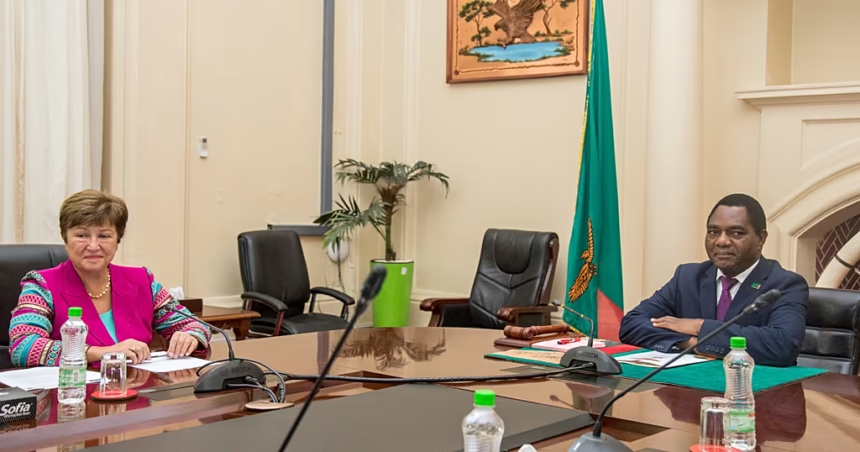
In a move that has caught both financial markets and policy watchers off guard, Zambia has formally withdrawn its request for a one‑year extension of its International Monetary Fund (IMF) lending programme, signaling a pivotal shift in economic strategy as the Southern African nation readies for general elections later this year.
Lusaka’s retreat from a planned 12‑month extension of its Extended Credit Facility (ECF) — a programme initially agreed with the IMF in 2022 to help stabilise Zambia’s economy following its historic 2020 sovereign debt default — means that the arrangement will now expire at the end of January 2026 as originally scheduled.
The one‑year extension package had held the promise of unlocking about $145 million in additional funding, a financial cushion that would have bolstered reserve buffers and maintained IMF oversight during a fragile economic period. But government officials have now opted against pursuing it, a decision confirmed by IMF representatives without detailed explanation.
Policy Recalibration Amid Political Timelines
Zambia’s decision comes against a backdrop of double‑digit inflation, persistent energy shortages and mounting political pressures as President Hakainde Hichilema’s administration prepares for a general election in August 2026. Analysts suggest that the government’s withdrawal from extension talks may be driven by a desire to assert macroeconomic confidence ahead of voters — framing the choice as evidence of stronger fiscal health rather than prolonged dependence on external assistance.
Government forecasts paint a more optimistic economic picture for the year ahead, projecting that the budget deficit will shrink by more than half, while growth could exceed 6% in 2026, boosted by reform momentum and favourable commodity prices.
Officials in Lusaka have signalled that the focus will now shift toward concluding the final, sixth review of the existing ECF arrangement, which is due for consideration by the IMF’s executive board later this month. Completion of this review may release additional disbursements tied to past performance, potentially softening the fiscal impact of foregoing the extension option.
Looking Beyond the IMF: Domestic and Regional Implications
While Zambia’s economy has shown signs of resilience — with improved macroeconomic indicators and progress on structural reforms — the abrupt withdrawal from a longer IMF engagement raises questions about how the government will navigate financing gaps once the programme ends. Market watchers note that without IMF monitoring and funds, Lusaka may need to turn more assertively toward domestic resource mobilisation, regional financing arrangements, and bilateral partners to maintain fiscal stability.
Investors and international creditors will be closely watching developments, particularly as Zambia works to sustain debt sustainability gains made since its 2020 default and continues efforts to attract foreign direct investment into key sectors such as mining and infrastructure.
What’s Next
Zambia’s pivot underscores a broader theme playing out across parts of Africa: the balancing act between multilateral engagement and domestic economic sovereignty as nations strive to emerge from debt distress without compromising political autonomy. As the IMF prepares to review Zambia’s final ECF performance later this month, global markets and regional policymakers alike will be watching how Lusaka charts its next chapter in economic governance.