
Senegal has stunned energy markets and regional peers alike by delivering oil production in 2025 that not only exceeded government expectations but also signalled a pivotal shift in West Africa’s energy landscape. According to the Ministry of Energy, Petroleum and Mines, Dakar reported annual output of 36.1 million barrels of crude oil, surpassing its initial projection of 30.53 million barrels and even outstripping a mid‑year revised estimate of 34.7 million barrels.
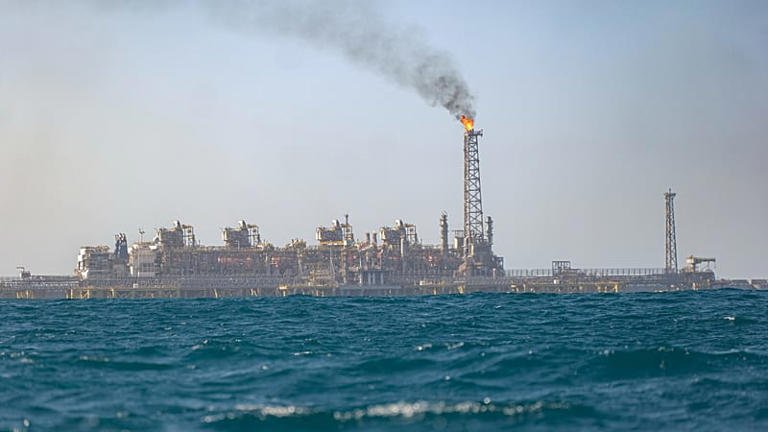
The star of Senegal’s energy story is the Sangomar offshore oil field, located about 100 kilometres south of Dakar. Commercial production at Sangomar commenced in 2024 under the stewardship of Australian energy major Woodside Energy, with Senegal’s national oil company Petrosen holding a minority stake. Strong reservoir performance, meticulous well maintenance, and robust operational execution enabled output to climb steadily throughout the year — a rare feat for a nascent oil producer.
In December alone, three cargoes representing roughly 2.94 million barrels of crude were exported to global markets, underscoring Senegal’s emerging reliability as a supplier. Meanwhile, liquefied natural gas (LNG) production also hit record highs, with 0.5 million cubic metres exported in December 2025, further enhancing the country’s energy export profile.
Beyond Production: Economic and Strategic Implications
The better‑than‑expected performance at Sangomar arrives at a critical juncture. Senegal only began commercial oil production in mid‑2024, marking its formal entry into the global hydrocarbons arena. The stronger output in 2025 not only boosts export revenues but also accelerates government plans to fortify fiscal stability and expand infrastructure investments. Earlier in the year, Senegal’s energy sector saw the inauguration of local refining operations — a step aimed at capturing greater value from domestic crude rather than exporting unprocessed barrels.
Analysts note that such strides position Senegal as a credible new voice in Africa’s oil conversation, challenging assumptions that only legacy producers like Nigeria, Angola and Ghana can shape regional markets. Increased output also unlocks potential for downstream development, inward investment, and heightened energy security — particularly as Dakar explores capacity expansion and new partnerships across the value chain.
Risk and Resilience in a Changing Market
However, challenges remain. Offshore operations like Sangomar carry inherent technical and environmental complexities, and global oil markets remain volatile amid shifting climate policy currents and energy transition debates. Senegal’s broader energy strategy will need to balance resource exploitation with sustainability commitments and local stakeholder interests.
Moreover, Senegal’s ambitions extend to natural gas, with joint offshore projects poised to ramp up LNG exports and contribute further to both domestic energy supply and foreign exchange earnings.
Conclusion
Senegal’s 36.1 million barrels of oil output in 2025 is more than a statistical beat of analysts’ forecasts — it signals the rise of a new energy contender in Africa. With disciplined operations, strategic export execution and complementary LNG traction, Dakar is carving out a reputation not just as a consumer of global energy trade, but as a producer and exporter with staying power.