
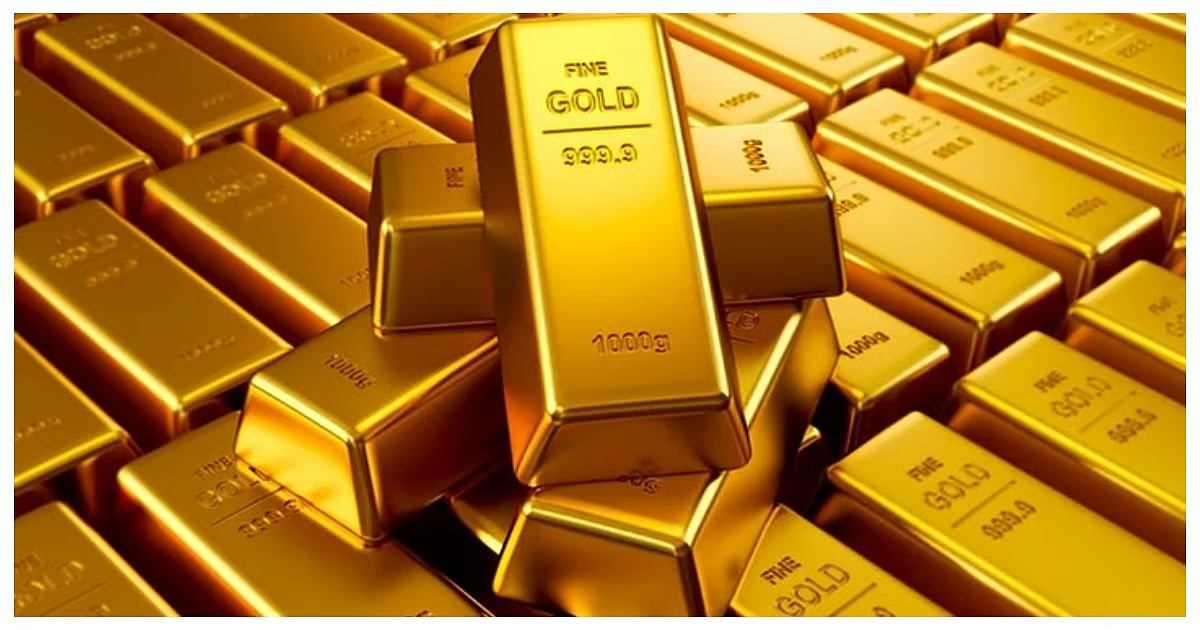
Global markets were shaken this week as gold prices surged past $5,100 per ounce, marking an unprecedented peak in the precious metal’s long history and sending ripples through Africa’s mining sector and export economies. The rally, driven by deepening geopolitical uncertainty and investor demand for safe-haven assets, is reshaping strategy across gold-producing nations from East to Southern Africa.
Bullion’s climb — the strongest major asset run since the late 1970s — reflects a marked shift in investor behavior as global risk factors mount, including trade tensions between major powers, central bank policy shifts and fears over fiscal and currency stability. Spot gold extended gains on Monday, with futures following suit, underscoring the depth of the bull market.
Safe Haven Demand and African Gold Export Boosts
For many African economies reliant on gold exports, the rally is more than a financial headline — it is a tangible engine for export revenue and foreign exchange. Uganda, although not a major producer by output, saw its gold-related foreign exchange inflows climb sharply as the country acted as a processing and trading hub for ores from neighbouring states. In 2025, Uganda’s gold exports surged by approximately 76 per cent to $5.8 billion, overtaking coffee as its top export earner.
Gold miners listed on major global exchanges also reaped benefits. Shares of companies with significant African operations — including South African and Canadian producers — rose alongside the metal’s rally, improving cash flow and balance sheets at a time when many firms had struggled under cost pressures.
Structural Opportunities and Persistent Challenges
Despite the surge, Africa’s mining sectors face a dual reality: while spot prices rise, structural constraints in production and regulation temper the upside. South Africa, historically the world’s dominant gold supplier, has seen output steadily decline as ageing mines and elevated cost bases discourage new investment. Even as prices provide revenue support, deep-level mining challenges and decades of underinvestment mean production gains remain limited.
Regional governments have also stepped up efforts to capture more value from the rally through royalty reforms and beneficiation incentives. Burkina Faso, Mali and Ghana have adjusted levy schemes to link state revenue more directly to rising prices, while Senegal and South Africa pursue downstream refining and processing to retain more value onshore.
Risks and the Broader Global Context
The motivations behind gold’s rally extend beyond Africa’s borders. Market anxieties about global debt dynamics, currency debasement, and geopolitical flashpoints from the Middle East to U.S.–Europe tensions have reinforced bullion’s role as a hedge against uncertainty. Analysts warn that while the rally could lift gold prices even higher, the same conditions stoking demand also pose risks to broader economic stability.