

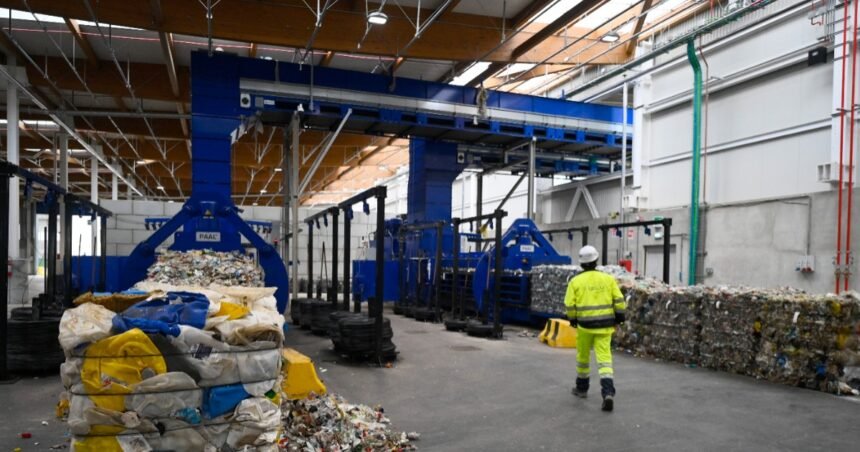
Lagos, Nigeria — In a landmark move that underscores both the business opportunity and environmental imperative embedded in Africa’s waste-management challenge, Polysmart Packaging Limited has unveiled plans for a $60 million state-of-the-art plastic recycling facility — poised to become the continent’s largest and most technologically advanced hub for processing post-consumer plastic waste.
Strategically located in Nigeria, this facility will be capable of processing up to 100,000 tonnes of mixed plastic waste annually, equivalent to recycling more than 5.5 billion PET bottles a year — a significant stride toward tackling the growing plastic burden that clogs landfills, waterways and urban infrastructure across West Africa.
Turning Waste into Feedstock for Industry
The plant’s technical backbone will feature cutting-edge systems such as Sorema recycling lines, TOMRA sorting technology, and dual Erema Vacunite units, enabling efficient segregation and conversion of diverse polymer streams. Polysmart plans to produce high-quality, food-grade recycled polyethylene terephthalate (rPET) that meets both European Food Safety Authority (EFSA) and U.S. Food and Drug Administration (FDA) standards — a milestone for local supply chains that traditionally rely on imported virgin plastics.
Beyond rPET, the facility will manufacture non-food industrial recyclates from HDPE, LDPE and polypropylene, opening new revenue streams and supporting Nigeria’s burgeoning packaging, beverage and fast-moving consumer goods (FMCG) sectors.
Economic Ripples and Job Creation
This expansion is being framed by Polysmart leadership not merely as infrastructure but as an economic catalyst. With operations phased to begin partial commissioning by March 2026 and full capacity by July 2026, the project is projected to generate thousands of direct and indirect jobs across the waste value chain — from collection and sorting to technical operations and plant management.
Analysts suggest that such capital-intensive projects could help position Nigeria as a regional hub for green manufacturing and recycled raw materials, enticing further investment into sustainable industrial technology in West Africa.
Environmental Impact and Circular Economy Promise
At full tilt, the Polysmart facility’s operations are expected to cut up to 170,000 tonnes of carbon emissions annually, reflecting gains in energy efficiency and reduced reliance on virgin plastic production — typically tied to crude-oil feedstocks. By diverting plastic waste into high-value recycled products, the plant aligns tightly with global environmental, social and governance (ESG) ambitions and the imperatives of circular economy frameworks currently being championed by government agencies and multinational partners.
Environmental groups have welcomed the announcement as a significant step toward mitigating Nigeria’s mounting plastic problem, though they note that comprehensive waste reduction policies and grassroots recycling initiatives remain crucial to long-term success.
A Blueprint for African Sustainability Growth
As markets increasingly reward sustainable practices, Nigeria’s investment in large-scale recycling infrastructure signals to global brands and investors that environmental responsibility and commercial opportunity can coexist profitably. If successful, the project could inspire similar ventures across the continent, reinforcing Africa’s role in the global transition toward a circular economy.