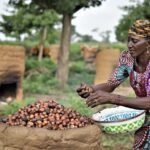

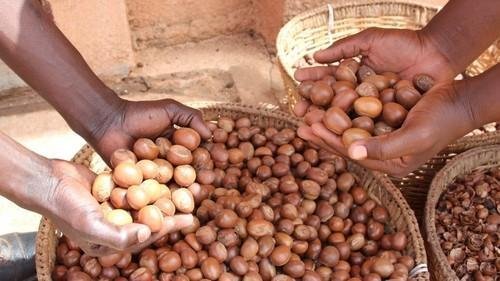
ABUJA — In a move that has captured global business headlines, Nigeria’s government has imposed a six‑month ban on the export of raw shea nuts, a staple ingredient in the cosmetics, skincare, food and pharmaceutical industries worldwide. Announced in late August by Vice President Kashim Shettima, the policy is part of a broader strategy to pivot Nigeria from a supplier of unprocessed agricultural commodities to a hub for value‑added shea products such as refined shea butter and oil.
President Bola Ahmed Tinubu signed off on the directive, positioning it as a “pro‑value‑addition policy” designed to strengthen the domestic shea value chain, generate jobs, and boost rural incomes — particularly for the millions of women who dominate the sector as pickers and early‑stage processors. Nigeria currently produces around 40 percent of the world’s raw shea nut supply, yet it captures a mere 1 percent of the estimated US$6.5 billion global shea products market.
At a multi‑stakeholder meeting in the Presidential Villa, Shettima underscored the government’s objectives: curbing informal cross‑border trade, securing raw materials for local factories, and expanding Nigeria’s footprint in high‑value derivatives such as shea butter, olein and stearin. Nigerian officials project the directive could generate about US$300 million annually in the short term, with ambitions of growing that figure by ten‑fold by 2027 as refining capacity and exports of finished products increase.
The ban places Nigeria alongside other West African nations — including Burkina Faso, Ghana, Mali, Togo and Ivory Coast — that have implemented similar restrictions to protect and grow their own processing industries. Observers note that leaving raw exports unchecked historically weakened local processing capacity and allowed processors abroad to capture the lion’s share of value from Africa’s shea harvests.
But reality on the ground has been mixed. While policymakers highlight the long‑term potential to transform Nigeria into a global supplier of refined shea products, the sudden withdrawal of raw exports has sent shockwaves through established supply chains. For many shea nut pickers — the backbone of the rural economy — the ban has disrupted income flows as international buyers, accustomed to sourcing direct from Nigeria’s abundant harvests, paused orders or shifted to neighbouring markets.
Critics of the policy — including industry analysts and rural producers — argue that waiting to build processing capacity before restricting exports might have reduced early disruption. Nigeria’s installed processing capacity, while growing, remains unevenly distributed and underused, meaning local factories cannot yet absorb all the raw material previously sold to international buyers.
The government insists the measure is not protectionist but strategic, aiming to catalyse local investment in processing facilities that could one day rival overseas competitors. Agreements are already being pursued to secure preferential access for Nigerian refined products in markets such as Brazil, and officials say the policy could unlock larger participation in a projected US$9 billion global market by 2030.
For now, Nigeria’s shea sector sits at a crossroads. The export ban reflects a bold bid to rewrite decades‑old trade patterns — but the nation’s ability to translate that ambition into equitable economic growth, particularly for women who have historically powered the industry, will depend on rapid investment in processing infrastructure, transparent support mechanisms, and careful management of expectations. With the six‑month window ticking, all eyes are on whether this policy will mark the start of a new chapter in Nigeria’s agricultural industrialisation — or a cautionary tale about the complexities of reform in a deeply interconnected global market.