

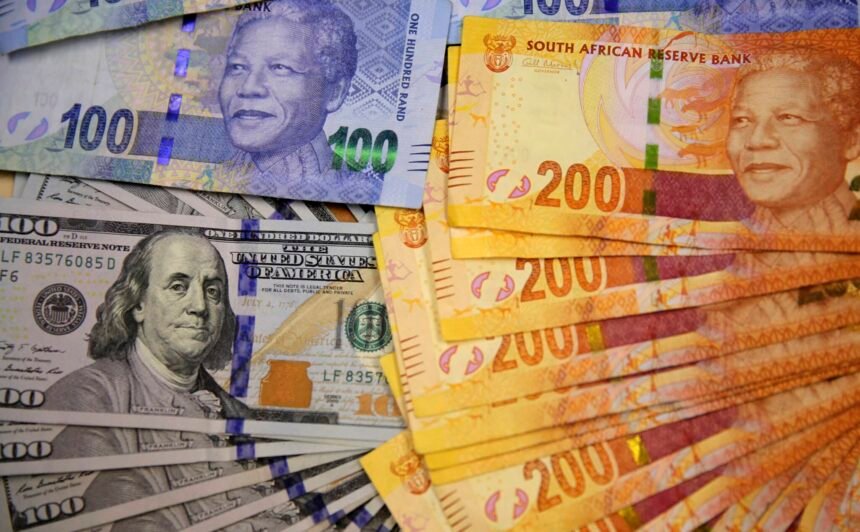
Johannesburg, January 8, 2026 — The South African rand weakened modestly on Thursday as investors entered a cautious holding pattern ahead of pivotal economic releases that could reshape near‑term market sentiment in Africa’s most industrialised economy. The currency’s decline comes amid broader emerging market pressures and mounting concerns over factory‑sector performance.
In early trading, the rand traded near 16.49 against the U.S. dollar, marking a 0.3 percent drop on the day after shedding roughly 0.5 percent on Wednesday. This movement tracked global risk sentiment and geopolitical tensions that have unsettled investors across developing economies.
Market participants are awaiting two critical data points: the Absa Purchasing Managers’ Index (PMI), which provides a snapshot of manufacturing sector conditions, and official November manufacturing output figures from Statistics South Africa. Analysts polled by Reuters had expected a modest 0.2 percent uptick in output, though earlier indications pointed to structural headwinds.
Recent manufacturing reports portray a sector under strain. Data released Thursday showed that production contracted year‑on‑year in November, driven by declines across core industries such as wood products and iron and steel, even as petroleum and chemical segments posted gains. Rising electricity costs and weak domestic demand were cited as key drags on performance.
The Absa PMI results also underscored contractionary conditions throughout 2025, with the index dipping further below the growth threshold as employment and inventories sub‑indices slumped.
Despite short‑term volatility, there are countervailing forces that could support the rand. South Africa’s net foreign reserves rose to around $71.1 billion in December — a sign of resilient external buffers — and some global investment banks have highlighted the currency’s gains last year as well as prospects for further appreciation if external conditions ease.
At the same time, the 2035 government bond yield climbed modestly, reflecting some risk aversion among fixed‑income investors amid data uncertainty.
With manufacturing contributing a significant portion of national output and serving as a bellwether for broader economic momentum, traders and policymakers alike will be closely parsing Thursday’s figures for signals on the depth and duration of the sector’s challenges. How these figures influence the rand and broader markets could shape investment flows into South Africa during the opening weeks of 2026.