
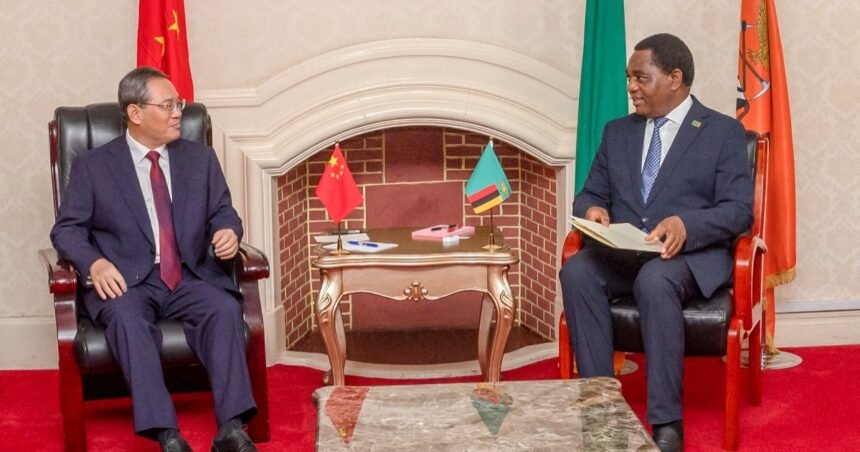
Lusaka, Zambia — January 19, 2026 — In a decisive move that underscores Zambia’s evolving economic strategy, the copper-rich Southern African nation has unveiled fresh trade and investment platforms in China designed to attract capital and strengthen commercial linkages as global currency dynamics shift and dependence on the U.S. dollar comes under scrutiny.
The launch of these centres in Guangzhou — including the China–SCO Economic and Trade Exchange Centre and the Guangdong and Macao Development Platform — represents a tangible effort by Lusaka to translate diplomatic goodwill into real economic engagement with investors across the Greater Bay Area and the broader Shanghai Cooperation Organisation (SCO) market.
Ambassador Ivan Zyuulu, Zambia’s top envoy in Beijing, led the inauguration, emphasising that the new hubs are intended to spotlight priority Zambian projects and foster direct commercial partnerships with Chinese and SCO-region enterprises. “This platform will help Zambia diversify its investment inflows while creating new export pathways,” Zyuulu said at the ceremony.
A Strategic Response to Global Currency Shifts
The timing of these developments reflects broader shifts in global finance. With ongoing debates over the role of the U.S. dollar in international trade — and forecasts suggesting potential depreciation pressures — Zambia’s move signals a proactive strategy to hedge against over-reliance on a single currency regime. By facilitating yuan-based transactions, Lusaka aims to reduce conversion costs, stabilise its foreign exchange environment, and insulate its export revenues from dollar volatility.
Notably, Zambia has also positioned itself as a continental pioneer by allowing mining companies to pay mining taxes and royalties in Chinese yuan, a first in Africa. This shift directly correlates to the structure of Zambia’s copper trade, where a significant share of exports — particularly refined metal bound for Chinese markets — is settled in yuan.
This approach simplifies fiscal flows tied to the country’s dominant export sector while reducing the friction costs traditionally associated with routing through dollar clearing channels. For major producers with Chinese contractual partners, the policy lowers operational complexity and preserves scarce dollar liquidity for broader economic needs.
Copper: Zambia’s Economic Linchpin
Copper remains the backbone of Zambia’s economy, accounting for more than 70 % of foreign exchange earnings and commanding deep commercial interest from both China and global supply chains. With China serving as the primary destination for Zambian copper exports, the deepening of trade platforms and currency arrangements aligns with longstanding commercial patterns while offering potential fiscal efficiencies.
However, the heavy concentration of trade exposure — while beneficial in the short term — also poses risks if global demand weakens or alternative suppliers emerge. Countries such as the Democratic Republic of Congo have already seen Chinese buyers expand into off-exchange refined copper supply, a trend driven by tight global markets and strong Chinese demand.
Balancing Opportunity and Sovereignty
Zambia’s economic policymakers articulate these initiatives as practical adaptations to an evolving international order, where multipolar trade dynamics are increasingly relevant and dollar dominance is being tested. At the same time, careful management will be required to balance deeper engagement with major partners like China while preserving national policy autonomy and flexibility in global markets.
Analysts suggest that the interplay between currency diversification, trade platform expansion, and the country’s copper export strategy could position Zambia as a more resilient player in Africa’s commodity economy — provided it continues to broaden its investment base beyond a singular external dependency.
As Lusaka accelerates implementation in 2026, markets and investors will be watching closely to see whether these structural shifts strengthen Zambia’s long-term external accounts or deepen strategic ties in a way that redefines its role in China-Africa economic relations.