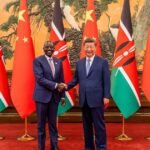

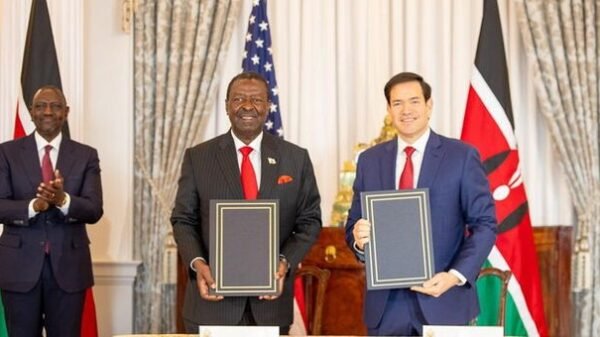
NAIROBI — Kenya’s President William Ruto has voiced strong support for a proposed extension of the African Growth and Opportunity Act (AGOA), a flagship U.S. trade programme that has been instrumental in expanding Kenyan exports and creating jobs across the East African region. Ruto’s endorsement comes amid renewed discussions in Washington about prolonging the pact that expired at the end of September 2025.
Originally enacted in 2000, AGOA provided preferential duty-free access to the U.S. market for qualifying African exports — a move that significantly boosted textiles, agricultural produce, apparel, and manufactured goods exports from Kenya and several other sub-Saharan economies for over two decades.
A Strategic Imperative for Kenya’s Growth
President Ruto, speaking during a policy dialogue in Washington, D.C., described the proposed one-year extension of AGOA as a strategic lifeline for Kenya’s manufacturing and export sectors, warning that failure to renew the pact could undermine progress toward economic diversification and job creation. “This instrument has been critical to our growth,” Ruto told reporters, emphasizing the importance of stable market access for Kenyan producers.
Kenya has consistently ranked among the top beneficiaries of AGOA, leveraging trade preferences to expand its footprint in the U.S. market, especially in textiles, horticulture, and leather goods. The programme’s expiry in 2025 has sparked concern among private-sector leaders who fear the sudden loss of preferential treatment could erode competitiveness and increase export costs.
Regional Impacts Beyond Kenya
AGOA’s influence extended far beyond Kenya. Across sub-Saharan Africa, the pact supported tens of thousands of jobs, encouraged foreign direct investment, and helped stimulate industrial growth. Its benefits were particularly pronounced for industries where tariff elimination under AGOA made African goods significantly more attractive in the competitive U.S. market.
Yet AGOA’s expiration has thrust African policymakers into a period of uncertainty. While some analysts have called for reforms that would modernize and expand the pact’s reach, others argue that Africa must pursue more diversified trade strategies to reduce reliance on preferential regimes that may be vulnerable to political shifts in Washington.
A Call for an “Ambitious Future Deal”
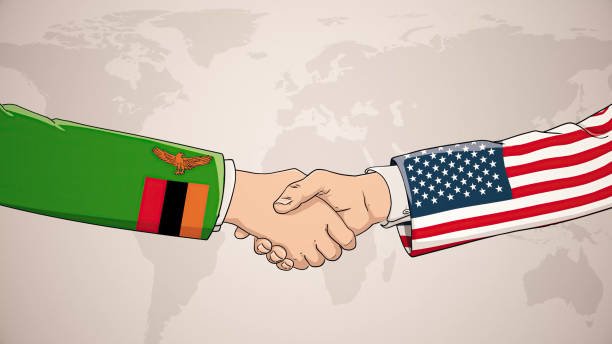
President Ruto did not simply urge a one-year extension; he called for a broader, more ambitious trade framework that could deepen economic cooperation between Africa and the United States. “We are prepared to explore reforms that benefit both sides,” Ruto said, pointing to areas such as value-added goods, digital services, and regional integration where deeper collaboration could drive mutual gains.
Challenges and Next Steps
Despite bipartisan interest in the U.S. to sustain strong trade ties with Africa, AGOA’s future remains in flux amid changing political dynamics in Washington and evolving global trade priorities. Some U.S. lawmakers have signalled support for targeted extensions, while others advocate for a comprehensive re-engagement that addresses 21st-century trade challenges.
African leaders have also emphasized the need to align trade preferences with structural reforms at home, including efforts to boost export competitiveness, enhance industrial capacity, and reduce logistical bottlenecks that have historically impeded trade growth.
For Kenya — whose proximity to major African markets and deep integration into global value chains have made it a bellwether for regional commerce — the outcome of AGOA’s renewal discussions could have far-reaching implications for economic strategy and private-sector confidence throughout 2026 and beyond.